Making a Career in the 1960's
Making a Career in the 1960's
Adventures in the Ballet
In September of 1964, June and I started a career with the American Ballet Theatre that would last for 35 years, with many of them in the Metropolitan Opera House. I had been on tour with ABT the year before, and the contractor asked me when I signed up again if I knew a violinist. Without hesitation, June made the call, showed up at his apartment with the Sibelius Concerto and the Bach E Major Partita, which impressed him enough to make her Principal Second Violin in a small orchestra. All these orchestras were small, but they had some extremely good players. Our bassoon player became Second Bassoon in the Boston Symphony, our clarinetist became Principal Clarinet for the Boston Pops, and our percussion player developed a legendary reputation for the extraordinary things he could do with speed and finesse. I like to think that June and I added something, and both the conductor and contactor seemed very happy with us.
This tour, typical of the way that things were in 1964, was basically a tour of one-nighters, which meant that we were on the bus for six to eight hours every day, going from place to place, and annoying waitresses at rest-stops with requests for separate checks.
On the bus with us were dancers who eventually became extremely famous, most notably: Eliot Feld, whose dance company has its own theater in New York; Cynthia Gregory, who became one of the first great American ballerinas; and Sallie Wilson, was the preeminent interpreter for Anthony Tudor. We shared some wonderful times naming the bus “The Mother of Us All,” and Giselle was not a ballet, but a way of life.
Despite the stelar cast in our orchestra, our first performance of Giselle got the worst review I have ever seen. In Oklahoma City, the critic, undoubtedly a Republican and forerunner of the Big Lie, said, “The orchestra, a miserable ensemble, undoubtedly suffering from tour fatigue, was so bad that it distracted from the stage.” When we read that review, we all went out to a fine dinner with plenty of drinks.
For us, it was heaven. We were making money, considering that we never had any before, and exploring the country, going to places we had never seen before. June always pointed out that when we toured with the American Chamber Trio, we were playing in the same venues as ABT 30 years before.
We had three conductors who were all very, very good. The principal conductor was Walter Hagen. Walter had been the principal second violin at the Metropolitan Opera when in a performance the conductor had a stroke and Walter took up the baton and conducted the rest of the performance. This got him on the front page of the New York Times and a job with ABT. Walter was an excellent conductor and many of the dancers told me that no one could time their landing with a loud chord better than Walter.
The second conductor was Bill Brohn. Bill was a good conductor and a very sweet man. Except at my first performance of Billy the Kid. There were many off beat entrances for the cello and I was the only cello. Seeing the terror in my eyes Bill would throw each entrance to me, saying loudly under his breath, “Learn to count, learn to count!” Bill eventually became a very famous orchestrator and arranger among his most prominent hits were Ragtime, Miss Saigon, and orchestration of Alexander Nevsky of Prokofiev.
The third of our three conductors was Kenneth Schermerhorn who was a truly world-class conductor and an assistant to Leonard Bernstein with the New York Philharmonic. Over the many decades I was a principal cellist I played with very few conductors that were more musical and more fun to play with than Kenny. Among many other things he was music director of the New Jersey Symphony, the Grant Park Orchestra, the Milwaukee Symphony, of course the American Ballet Theatre Orchestra for years, and eventually the Nashville Symphony, where he presided for twenty years. They were so enamored of him that they named their hall in his honor.
After spending many years in relative obscurity in New York (and on bus tours everywhere else), by the early 1960s the American Ballet Theatre had become one of the primary ballet companies in the world. The 1965 Season for the American Ballet Theatre was a very important one. It was billed as the company’s 25th anniversary, and it was the season that earned American Ballet Theatre the very first grant issued by the National Endowment for the Arts. The company began in 1937 under the name “Ballet Theatre” by Mikhail Mordkin, a former dancer with the Bolshoi Ballet, and his student Lucia Chase. A few years later Richard Pleasant, a one-time Hollywood agent, came to New York to work with Chase to turn the company into a “living museum of dance,” offering an alternative to George Balanchine’s single-choreographer approach. In 1956 the company changed its name to “American Ballet Theatre.” Lucia Chase spent her entire career dancing in the company, directing the company, and backing it financially. When she retired in 1980, Mikhail Baryshnikov became the director.
1965 was the first season that the American Ballet Theatre performed in the newly built New York State Theater in the equally new collection of schools, libraries, theaters and concert halls known as Lincoln Center. The State Theater was designed, to the specifications of George Balanchine, by Philip Johnson and was built with funds from the State of New York as part of the 1964-1965 World’s Fair.
The 1965 season included some important performances. Sallie Wilson, the leading expert on Anthony Tudor’s ballets, danced in his Dark Elegies (set to Mahler’s Kindertotenlieder) and Lilac Garden (set to the Chausson Poème). She and Elliot Feld rode on the bus with the musicians, and both of them knew a lot about music. Feld played the flute and would often stay up all night gambling. We performed Agnes de Mille’s Wind in the Mountains, with a score by Laurence Rosenthal. Agnes de Mille was married to Walter Prude, an extremely important person in the world of concert management (he managed Arthur Rubinstein, Marian Anderson, and Isaac Stern), and the dancers would sometimes refer to her as “Agony Prude.” Another highlight of that season was the first American Ballet Theatre performance of Stravinsky’s Les Noces with Leonard Bernstein conducting.
After that New York season, we began a fairly long tour with a ballet company created by Rebekah Harkness. Mrs. Harkness was one of the wealthiest women in America, and fancied herself a composer, sculptor, and a patron of the arts, particularly of ballet. Her wealth came from the countless shares of Standard Oil that she inherited from one of her many husbands.
Clive Barns described the Harkness Ballet as “perhaps a company of splendid dancers in search of a splendid ballet.” Harkness seemed to think that she could achieve the results of George Balanchine if she could assemble a group of young composers, dancers, designers, and choreographers and give them a place to work (her home in Newport) and places to perform. She proved very publicly that all the money in the world, though it can pay salaries, cannot buy artistic success, and she will be remembered (if at all) mainly for her tantrums, excesses, and for the way she squandered her fortune. Craig Unger wrote about her life, failed marriages, and misadventures in his 1989 book Blue Blood.
The musicians traveled on a crowded bus, and Mrs. Harkness traveled in a chauffeur-driven sky-blue Rolls Royce. With the one exception of “Pas de deux” from Tchaikovsky’s Sleeping Beauty, the repertoire was some of the worst music I ever heard, particularly Yomanja, Mrs. Harkness’ own ballet that she based on Native American legends. We also performed a ballet set to a piece by Mrs. Harkness’ composition teacher, Lee Hoiby.
In the fall of 1965 Walter Hagen became music director of the Joffrey Ballet and appointed June concertmaster for the upcoming tour. One of the major ballets was called Viva Vivaldi. The music to this ballet was a guitar concerto which had, in the slow movement, a big and lovely violin solo. The guitarist who, by the way, traveled with us on the bus, was Rolando Valdes Blaine, a very well-known and distinguished player. Among other things, he told us how to make credible programs for important recitals. The best thing about this tour was ending up in New Orleans, where we spent a good deal of our time in various famous French restaurants.
In the spring of 1966, we had the good fortune to be engaged by Maxim Gershunoff for the New York run of the Bolshoi Ballet at the Metropolitan Opera House.
Maxim Gershunoff was a Vice President in the Hurok organization and contractor for orchestras that played with the various visiting companies that Hurok brought in. He engaged us to play the New York City run of the Bolshoi Ballet at the old Metropolitan Opera House on 40th Street.
The Bolshoi came with three conductors whom we named Cesar Romero, Danny Kaye, and Phil Silvers since they had an uncanny resemblance to those famous stars. Danny Kaye’s English vocabulary consisted of four words, “very much stand by.” He must have picked up the stand by from traveling on an airplane. The translation was, “Watch me here.” I don’t remember much about Cesar Romero, except that he looked like the archetypical KGB agent. Neither of them had any real talent in my opinion. However, Phil Silvers whose real name was Gennadi Rozhdestvensky, was an extraordinary conductor and very famous. He conducted The Rite of Spring and the Nutcracker. Apparently, it was in the works to bring over the Bolshoi Opera the next year, and Rozhdestvensky wanted to bring over his own orchestra. SO while conducting the overture to the Nutcracker he managed to confuse the violin and viola sections until there was a great gap between them. At which point he would throw up his hands and say, “What can I do with American musicians?” This assessment was not totally unjustified since the Hurok Philharmonic featured the widest possible gap between players of true excellence and total wash-outs. For whatever reason Hurok was loyal to his old cronies and appointed one of them, George Kuklie as his contractor when he started to bring over these groups. Max Gershunoff was powerless in many cases to get rid of the dead wood. In his favor though, wherever he had a chance he hired really talented people.
Under any circumstances it was a privilege and a pleasure to have had the opportunity of playing at the old Metropolitan Opera House . In all honesty, it had seen much better days. But so much of the golden age of opera starting with Toscanini and Mahler, as well as the whole raft of legendary singers, took place there. I had the chance to witness its fabled acoustics and can say unequivocally its reputation for excellence was not exaggerated.
Later, Max Gershunoff hired us for a 17-week tour of the Royal Ballet from London. This tour featured two of the most famous dancers in the world, Rudolf Nureyev and Margot Fonteyn. In order to get this job, I had to audition on the two big cello solos in the repertoire, Swan Lake and Sleeping Beauty.
The Concertmaster was Guy Lumia. Guy was a fantastic violinist whose solos were so consistently great that if he had one squeak, or one out of tune note, it would have put us all into a state of shock. Besides being a great soloist, he was also a great leader of the first violin section and in general for the orchestra. He had an instinctive feeling for when someone was going to come in on a rest, and just at that moment, his bow would fly high up in the air for all to see, like a traffic cop. At one point, Guy gave a New York recital in which he was reviewed much more favorably in the New York times than the legendary Nathan Millstein.
Among the many things I learned from Guy, was how to prepare a recital. When Guy was going into the Tchaikovsky competition, he told me, “I have no time for practice. It takes all day just playing through the repertoire.” Before my Alice Tully Hall debut recital, Guy told me, “Get nervous as early as possible. That’s the time to be nervous. Not when you step out on the stage.”
Eventually Guy became the Concertmaster of the Metropolitan Opera. He died young, at 51, probably of AIDs. One of many beautiful musicians taken from us by that awful disease.
The flute section of this orchestra had to be the greatest flute section ever put together. The principal was Paul Dunkel. For me, the most brilliant and talented flutist I ever heard. He sounded like Heifitz in terms of the unbelievable intensity of his sound, and the brilliance of his technique. Since there were so many flute solos, he made an enormous impression on everybody. At that time, Dunkel was 23. Shortly thereafter, Paul came in second in an international woodwind competition held in England. The first prize winner was James Galway, who apparently had to fight very hard to beat Dunkel. Of course they became lifelong friends. Among his other accomplishments, Dunkel co-created the Composer’s Orchestra and the Westchester Philharmonic. Until his death in 2018, he remained principal flute of the New York City Ballet. His colleagues in the Hurok Philharmonic were Paul Fried, who immediately became second flute and/or associate principal of the Boston Symphony, and Anne Diner, who became the principal flute of the Los Angeles Philharmonic. Dunkel always said she got it over him, because Julius Baker blackballed him to Zubin Mehta. Paul Dunkel remained a lifelong friend of mine, and I have one funny story. Paul was very proud of the fact that he tiled his kitchen with linoleum tile. Years later my sister Lucy bought the apartment and, on many occasions, had the opportunity to tell him that the tile was still good, and anytime he wanted to come and check it out he was more than welcome.
I met the outstanding oboist Humbert Lucarelli. Bert had been principal oboe of the Lyric Opera of Chicago before he came to New York. When I got the job as principal cellist, Bert gave me extraordinarily good advice, “Don’t try to make any kind of a solo career in Chicago. Nothing you do there will move your career forward any place other than Chicago, if that.” That advice saved me from wasting an awful lot of time, energy, and money because New York was the only place to establish any level of world-class stature. A review in the New York Times is good all over the world. A review in the Chicago Tribune or Sun Times is not necessarily even good in Chicago, and a bad review gives your adversary ammunition to take away the one thing that was really worthwhile in Chicago, namely the principal chair of the Lyric Opera. Bert was also big on taking your destiny into your own hands, and told me the various things that he did to promote himself. Eventually he became one of the great stars of the oboe world. Bert has commissioned and given American and world premieres of over one hundred works of contemporary oboe music.
A great and useful influence on me during that 17-week tour was the principal cellist Albert Catell. Albert Catell was born in Vilnius, Lithuania in 1910 (the same year that my father was born). In 1924 he went to the Leipzig Hochschule fur Musik to study with Professor Julius Klengel, who was one of the most renowned cello teachers in the world. He completed his training there in 1927 and went to Berlin that year to work with the great cellist Emanuel Feuermann. He left Germany in 1936 as the Nazi threat loomed over the horizon. He joined the Israel Philharmonic as solo cellist and played there under many great conductors including Toscanini and Furtwangler. It was no wonder that Albert harbored a positive dislike for me, considering me untalented and a young whippersnapper. That however did not deter me from appreciating the way he played the big solos in Swan Lake, Sleeping Beauty, and Giselle. He played the opening of the Swan Lake solo in a grand style, using many separate bows and lots of vibrato. That became the model for my own interpretation of that solo which I played three to four hundred times in public. He had a similarly large and romantic approach to the beautiful solo in Sleeping Beauty, and also Giselle. I learned most of what I knew about laying out a cello solo from watching him do it. It’s ironic that I was the one to play all of these big solos on the national television broadcasts. Also, to my knowledge, Albert never played a New York recital. I played twelve of them. Nevertheless, I owe him big time for what I learned from his playing.
We brought four of the greatest full-length ballets ever written on tour: Prokofiev’s Romeo and Juliet and Cinderella, and Tchaikovsky’s Sleeping Beauty and Swan Lake, and played under the quintessential English conductor John Lanchbery. Known as “Jack” to his friends, he was one of the finest conductors I ever worked with.
Jack was 43 years old and in his prime. He was an accomplished composer and arranger, which contributed to his outstanding interpretations of these works. He would reinterpret the works he was conducting in order to favor the strengths of the orchestra’s best players. He had a huge vocabulary and wonderful way with words like “mellifluous,” “expunge,” and “fecund.” He also had a fantastic sense of humor. I can’t resist at this point including one of his jokes.
Medical students at Oxford decided to give the very famous lady theologian a hard time. One of them said, “Madame, how DO you reconcile the fact that God made man in his own image with the Jewish rite of circumcision?” She replied, “That’s an easy one. Shakespeare said it best when he said, ‘There is a divinity which shapes our ends, rough-hewn them as we will.’”
When he wanted more bite out of the cello section, Jack would say, “Let’s have some toast for the poached eggs.” He could empower a player to play beyond his or her normal capacities. I was totally terrified of him, but we became very good friends, and we often had breakfast together when we were on the road.
Later, when Jack became music director of the American Ballet Theatre and I was the principal cellist, he inserted cello solos into his arrangements, saying that I was irresistible in the key of D minor. I played solos with him in performances of Giselle, Bayadere, and Sleeping Beauty, which were broadcast on the “Live from Lincoln Center” PBS series, and played countless performances of Swan Lake and other popular ballets that were not televised. My greatest experience with Jack was doing several performances of Schoenberg’s Pierrot Lunaire at the Met, with Rudolf Nureyev dancing the role of Pierrot. Working with Jack taught me to have confidence in my ability to please conductors, particularly the excellent conductors I would later encounter at the Lyric Opera of Chicago. A treasured autographed picture of Jack hangs in my studio.
The touring conditions were so extraordinarily better than they were on the bus tours that it was almost like being on vacation. In charge of our instruments and baggage was a young man named Jonathan Prude. He was the son of Walter Prude who managed Arthur Rubinstein, Isaac Stern, and Marion Anderson and he was the son of Agnus De Mille. Agnus De Mille was a famous choreographer known to all my American Ballet Theatre dancers as Agony Prude. She was most famous for her ballet Rodeo, music by Aaron Copeland. Jonathan would have all our instruments and baggage picked up outside our one hotel room and magically make it appear outside our hotel room in the next city. How can you beat that? I have no idea what happened to him, except that I’m sure he went back to Brandeis.
A few interesting plane trips that occurred on this tour. 1. On a trip between Los Angeles and Vancouver the pilot of our plane was Captain Hazard. 2. On the plane trip between Vancouver and St. Louis the musicians were relegated to a DC6, it was obviously a very, very long trip. However, all those little bottles of alcohol that they serve to a whole plane were made available to all twenty of us. No one walked off that plane in a state of sobriety. One way or another we staggered our way to our hotel where our instruments and luggage were waiting outside our rooms.
One of the best things about the Royal Ballet and subsequent ballet and opera jobs was that it gave us a steady income and a path to what would become our steady lifetime income at the Lyric Opera of Chicago and the American Ballet Theater. June spent 37 years at the opera and 35 years at the ballet.
Another advantage of traveling with the various ballet companies was that we were thrown into contact with older musicians who had lots of experience on how to make one’s way in the world of music and, occasionally, connections and good advice.
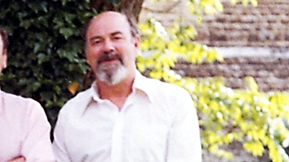
John Lanchbery
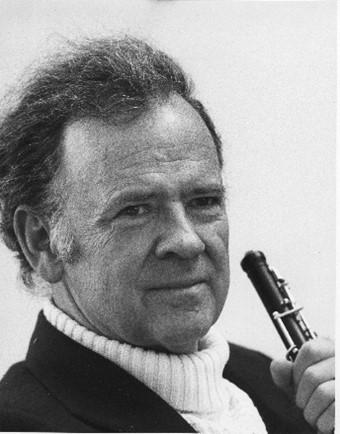
Ray Still
Departures
On two significant occasions, June declined to go along with me on my adventures. The first was the Fourth Congregation of the Arts at Dartmouth College, where playing assistant principal second violin did not suit her. The second was a long tour of the American National Opera Company which immediately followed a long tour of the Royal Ballet.
My one departure from this type of work came in 1966 when I was offered a job as principal cellist for the fourth Congregation of the Arts at Dartmouth College. This organization featured residencies of significant 20th century composers like Kodaly, Ginastera, and Lutosławski. This orchestra had many great players: Alfred Genovese, principal oboe of the Metropolitan Opera, Robert Genovese, associate principal clarinet of the National Symphony, William Steck, who became concertmaster of the National Symphony, David Cerone, longtime President of the Cleveland Institute, Robert Willoughby, world famous flutist and teacher, Crawford Best, principal bassoon of the Minnesota Orchestra, and many others of equal stature.
This orchestra primarily played the works of the resident composers, all of whom were quite famous. We had two weeks of Peter Mennin, playing one or two of his symphonies, his cello concerto, played by Paul Olefsky, and his tone poem Moby Dick. We all came down with Meningitis. The high point for me was the residency of Witold Lutosławski. I was totally taken by his wonderful Concerto for Orchestra. He also gave me a few hours of his time analyzing the great C Major cello quintet of Schubert, a memory that I will always treasure.
In addition to our orchestral duties, which included a rehearsal 5 days a week and a performance on Sunday, Bill Steck and I were assigned to coach chamber music groups. At one point there were 20 of them, SO on Saturday afternoons after the final dress rehearsal every week Bill Steck and I would open two bottles, one of Scotch and one of Drambuie and drink rusty nails until we were so plastered that we didn’t know what our names were. In spite of that fact, we were still capable of laughing hysterically at just about anything. One funny story about Bill: he asked me about my cello and I started rhapsodizing about my acquisition of the cello that was later to be known as Floria. After a long time, I finally, just to be polite, asked him, “What violin are you playing?” He said, “I have a Guarneri del Gesu.” I said, “How could you let me go on like that?” And he said, “You didn’t ask.” One other thing that he said that stuck with me was, “You can’t argue with a man who’s right.” That’s what he said, but I’ve seen plenty of people doing it anyway, all you have to do is turn on your television set.
Within days of the end of the 1967 Royal Ballet Tour, I started a tour with Sarah Caldwell’s American National Opera Company. We flew from New York to Indianapolis, Indiana where we had several weeks of rehearsal and our initial performances. This tour was also, by the way, under the auspices of S.Hurok Presents. We presented three operas Tosca of Puccini, Falstaff of Verdi, and Lulu of Alban Berg. Again, I have written about this extensively, but in short, I managed to learn the unbelievable number of difficult cello solos in Lulu by using my metronome and staying up half the night, on many nights. That methodology and my willingness to use it made it possible for me to survive lifelong in many important professional situations. The big deal for me however was the infamous solo in the third act of Tosca. Because of its many big shifts it has tested the nerves of every cellist who tried to play it, me included. Personally, I avoided the shifts by crossing strings and playing a lot of it on the D string, and crossing over to the A string for the big notes. The conductor for Tosca was Jonel Perlea, who was an even more important conductor than John Lanchbery, fortunately Perlea really liked the way that I played the solo, enough to take me out to dinner after each performance. The experience of playing the solo so many times increased both my confidence and my reputation exponentially. This was one of many threads that eventually landed me the job as principal cellist of the Lyric Opera of Chicago.
We had our first rehearsals (which lasted several weeks) in Indianapolis, Indiana. The first day of rehearsal, after wasting the morning playing Beethoven’s Eighth Symphony, we started with Lulu. I was unable to get the music in advance, and there was a cello solo on every page. At the end of that rehearsal my stand partner Yuan Tung looked at me and said, “You don’t look too good, I’m worried about you.” Of course, I knew that I was in big trouble, so I did the only thing that I could think of which was to spend the entire night, until the next morning, with my metronome going through those solos. Since even then I knew that sounding good is always better than sounding bad, I committed affronts to the score that would have made Alban Berg turn over in his grave. If it had been on Saturday night, it would have been the Saturday night massacre, but since nobody knew any better than I did how these things were really supposed to sound and our conductor Osbourne McConathy was totally incompetent he and everyone else applauded the fact that I sounded like I was playing a concerto every time I hit one of those solos. Not impressed was our concertmaster, Josef Stopak, he knew how those solos were supposed to go and many of them were in octaves with him. He definitely did not appreciate getting rolled over and very much upstaged. However, the rest of my colleagues thought that I sounded like Leonard Rose, and two of them John Wummer, principal flute, and Rudolph Puletz had been principals at the New York Philharmonic at the time Leonard Rose had been principal cellist. Also Ray Still was playing principal oboe and he was principal oboe of the Chicago Symphony, and thought I sounded as good as Frank Miller. In my career I played both Lulu and Wozzeck several times at the Lyric Opera and although I was much more respectful of the score in front of me, I was never willing to not sound good if there was any way of doing it and passing muster with the various conductors.
The big opera for Sarah Caldwell was Falstaff by Verdi, and half our rehearsals were on Falstaff since she was running the company. The only thing I remember about Sarah Caldwell, besides the fact that she was obese, was that she was totally odoriferous. Before her entrance onto the pit, I would liberally spray Right Guard onto the podium. It didn’t do much good, and she seemed to never smell it.
The third opera in our repertoire was Tosca. I had figured out a way to play this notorious solo crossing strings rather than playing it up and down the A string. The problem with doing it on one string was that there were many leaps which made it hard to sound like a melody, rather than a seek-and-destroy mission. During the Hurok Royal Ballet tour, I had worked with Shirley Tabachnick in Chicago. As principal cellist of the Lyric Opera of Chicago she had played the Tosca solo many times, and was devoted to the all-on-the-A-string interpretation. She assured me it would sound much better that way. Of course I knew that it wouldn’t, and played it my own way. At the first performance, which took place obviously in Indianapolis where Shirley was principal cellist of the symphony, Shirley came and at the end of the performance came back to congratulate me on the solo, adding “I knew you could play it all on the A string.”
As a result of my rendition of the Tosca solo, I made three wonderful and important friends. The first was Maestro Perlea. At the time I didn’t realize how significant it was that Perlea liked my playing as much as he did. He had recorded most of the major cello concertos with the renowned cellist Gaspar Cassadó. He had also conducted legendary performances of Tristan und Isolde at the Metropolitan Opera with Melchior and Traubel and many other recordings of important operas with most of the great singers of the golden age. If I had known his true greatness as a musician at that time I would have died of shame when he took me out to dinner after most of the performances, ordering me one brandy alexander after the other until I was totally smashed. We remained friends until his death in 1971 on the same day that George Szell died. When I played a recital in Carnegie Recital Hall in 1976, his wife and several cousins came to cheer me on. Many years later when I played Tosca at the Lyric Opera under Julius Rudel I told him how Perlea had conducted it, and Rudel, who had conducted Tosca hundreds of times, asked only how he brought in the basses in one place. He conducted exactly the way that I explained that Perlea had and told me the next year when he came back to conduct Manon of Massenet that he heard the radio broadcast and was extremely pleased with the cello quartet.
The second person of real importance that I connected with was our lead soprano Marie Collier. Collier made a sensational debut in London replacing Maria Callas and had sung the role of Tosca all over the world. After the first performance she came up to me and asked me how it was that every cellist she had ever heard playing the solo sounded pathetic, and I sounded so good. I explained that my cello enabled me to play effortlessly across two strings instead of having to play all those big jumps on one string. She said, “You must name your cello Floria, in honor of Floria Tosca,” which I did, and that cello to this day is still known as Floria. We became very good friends on this tour, and she was always happy to give me advice on how to deal with all manner of situations. For example, when some of my colleagues tried to put me down she said quoting Gladstone, “To raise your head above mediocrity is to have enemies.” When one of the singers asked her how she did something she said, “If I told you that, we’d both be able to do it.” One of her favorite quips was during an altercation between Gladstone and Disraeli, Gladstone said, “Sir, you will either die on the gallows or of some loathsome disease.” Disraeli replied, “That, sir, depends on whether I embrace your politics or your mistress.”
On the dark side though, she was very addicted to alcohol. Fortunately for me, I did not share her love of booze. The two things that were bothering her the most at that time was that she felt she was getting older and that there was no future for her, and at the same time she was preparing the role of Manon Lescaut and the role of Christine for the first performance of Mourning Becomes Electra by Martin David Levy at the Metropolitan Opera. She got me a ticket to the first performance, which was conducted by Zubin Mehta, who she called Zubie Baby. Many years later I played Mourning Becomes Electra at its revival at the Lyric Opera of Chicago and Martin David Levy told me that Marie was never sober at the rehearsals at the Met in 1968. I was very sad to hear of her death in December of 1971. They’re not sure whether she fell out of a window or jumped, but I do know how haunted she was by the coming of age and her fear of a deteriorating voice. However, during this tour, we were good friends, had lots of good meals together, and she gave me very good advice about many things. On New Year’s Eve, she came to my New Year’s party in New York and told me that she really liked June.
The third person of significance that I met on this tour was the great oboist Ray Still. He was on this tour for two reasons, he had been fired from the Chicago Symphony for insubordination by Jean Martinon when he explained he was more interested in reading his book than paying attention to Martinon. Also he was having an affair with one of his students Sally Watkins, also a fantastic oboe player (who eventually became principal oboe of the National Symphony and considered by all a jewel in their orchestra). On our many bus trips Ray would spend a great deal of time explaining to me how he made reeds and also how much better an oboe player he was than Marcel Tabuteau. Many years later we compared his rendition of the famous oboe solo in the beginning of Strauss Don Quixote with the Chicago Symphony and the one that Tabuteau did with the Philadelphia Orchestra. There was no doubt that Ray could sustain a sound significantly more intense and for much longer duration. Because of his big ego he was extremely disliked by many people. Personally, I enjoyed his arrogance and always respected his great musicianship. His recording of the Brahms Violin Concerto with Heifetz and Reiner with the Chicago Symphony is legendary.
During this tour with the American National Opera Company I got a call from Alexander Horvath, Concertmaster and newly named contractor for the American Ballet Theatre. Knowing how annoyed I was with the goings-on at ABT, he assured me that the relationship with the New York City Ballet was over, and if I would come back as principal cellist he would really make it worth my while financially. At that point I realized that the American National Opera Company was going down. Sarah Caldwell’s checks were constantly bouncing and the American Federation of Musicians gave permission to anyone who wished it to leave the company without any penalty from the Union. It was an offer that I took up since there was an American Ballet Theatre New York season at the city center starting only one week after the American National Opera Company tour would end. Naturally I didn’t tell anybody of my plans since there was an expensive flight from New Orleans to Boston. After assuring everyone that I intended to play the rest of the tour I went straight to the counter at Logan Airport and booked a flight to New York the next hour.
In many ways this decision changed the course of my life. For one thing the ABT National tour was like the Hurok tour, flying every place and using big orchestras. Alex Horvath, knowing that his sound would not pass muster at the Metropolitan Opera House, started to hire important violinists to play the big solos in Swan Lake. In Los Angeles I had the opportunity to play with Israel Baker who was a favorite chamber music associate of Jascha Heifetz. Baker really liked my playing, and at the end of the first performance told me that I really needed to play for Gregor Piatigorsky and his students. Since there was a rivalry between Piatigorsky and Leonard Rose I thought this would be nothing but trouble for me, so I asked Mr. Baker why he thought I should do this. He said, “Let them hear what a real cellist sounds like.” That was a compliment I could not resist and went and played. I’ve written that encounter in other places. The tour went from Los Angeles to San Francisco to Portland, Oregon to Seattle, Vancouver, and Chicago.
When we got to Chicago I got a phone call at 10 o’clock in the morning one day. The stentorian voice at the end of the line said, “I am Carol Fox, general manager of the Lyric Opera of Chicago. I heard you play the solos in Swan Lake last night. I need a principal cellist for my orchestra next season. I think you’re it. Will you come and play for me at 12?” I protested saying that I was willing to do it, but I was unwilling to play any Strauss or Wagner at such an early hour.
I played for Miss Fox and her various assistant conductors for an hour, at which point she said, “this is a decision I simply cannot make by myself. My artistic director Pino Donatti is coming in on Monday, could you play for us then?” I agreed with the stipulation that she had to pay my airfare, my wife’s airfare, and my cello’s airfare back to New York. For me the highlight of the audition was the very end when they put Don Juan of Strauss in front of me. Since I knew it by memory I pushed the stand to one side and botched the opening. Carol Fox said, “That will do.” I said, “That will not do.” And proceeded to ace the opening and play for a page and half by memory, at which point she yelled out, “Uncle! How much money would it take to get you to live in the style to which you would like to become accustomed to.” And that was the start of my 44-year relationship with the Lyric Opera of Chicago.
The big season for the American Ballet Theatre occurred a few months after I got the Lyric job. This season took place at the Metropolitan Opera House and had many very distinguished musicians in the orchestra. The famous violinist Aaron Rosand was hired to play the violin solos and as with Israel Baker, Rosand liked my playing and offered to help me move my career forward which he did.
One of the best things about the Royal Ballet and subsequent ballet and opera jobs was that it gave us a steady income and a path to what would become our steady lifetime income at the Lyric Opera of Chicago and the American Ballet Theater. June spent 37 years at the opera and 35 years at the ballet.
Copyright Daniel Morganstern. All Rights Reserved.